Showing posts with label authors. Show all posts

Monday, January 8, 2018

5 Tips for Getting off to A Fresh Writing Start

Every year in January would be writers, beginning writers and even published writers tell themselves this is the year they hit it big and get all the writing done that they set out to publish. Year after year things don’t happen for the majority of writers. They stare at the blank pages and then
either give up after a few days, abandon their project half way through or decide the effort isn’t worth it.
           
Some do many to stick with their idea and keep writing and writing, and editing and eventually get the project done. Will they turn it into a best seller? Well, that is another question altogether.  But that elusive golden ring cannot be the automatic end result we expect or we would never get started. We can keep it up there dangling above us and keep reaching for it and that can make the journey all the more fun. Think of how fulfilled you will be when you finally latch onto that golden ring and get a good firm grip on it.

But for the rest of us, we must keep battling away and reaching ever upward with our writing, whether we are working on the first short story, the third book we’ve written or the 8th novel in a series.  There is no looking back so we must keep moving forward in our writing journey. (well, there could be looking back. It just won’t get you published any faster)
            How do we get started off every new year with a reach toward that golden ring? We can either say we want it or we can do something about it and that means we must start writing. What could make this year different? Well, let’s look at some possibilities to get us started:

1,  Commit to writing or working on something writing related every day. Even if it isn’t new words on your novel, make certain you are working in some way in that direction of getting published. That can mean editing yesterday’s pages,  researching for tomorrow’s writing or going through old projects to find the one you want work on next. The biggest problem with this step and the reason I put it first is because this is just a first step. You have to move beyond it. If you don’t, you won’t ever get anything done.

2. Write something new – new words, new thoughts, new ideas! That means moving beyond that first step of research or digging out old things and then writing something fresh. You need to write new material at every opportunity so why not start every morning with some fresh writing, whether it’s on an old manuscript or a new blog. Write something  new everyday and engage your brain. Let it know it’s going to have to find something new to write  EVERY SINGLE DAY.

3. Pick up yesteday’s pages and edit or re-write them if you can’t think of what you want to write today. You may find something in there that will further the direction you want your story to go. Or you might find something totally different you want to try. If you want to try it, do that! Why not write the pages and see if the plot idea or character idea will work.

4. Pick up the story in a new place. Don’t just write the next scene. If you have made plotting notes, go ahead and write something in a future chapter that you know you want to use. Try the big fight scene or something that will be totally fun to write. You know you’re going to use the scene, write it now and have fun with it. You can always edit later.

5. Don’t be afraid to experiment. Again, this might entail writing not the next scene, but something further ahead or rewrite a scene you’ve already done but in a different way and with a different outcome. Does it change the course of your book? Perhaps, but it may make it better.

The main take away here is to keep writing. Start out the new year with a fresh outlook on your writing whether it’s just picking where you left off last year or you are starting something new. Use the new year as a time to commit to finishing this book and your other work.  

Monday, July 11, 2016

5 Tips to Writing on Vacation

Last week we looked at how to get through the summer and keep writing. Now let's tackle another summer distraction: vacations. If you are heading out on vacation it may be tempting to put your writing work aside, thinking it will be easy to get back to once you return to a normal schedule. Yes, that is true but there are also things you can do while on vacation to keep from breaking the writing habit.

1. Research.  We said it last week and let's repeat it again but this time with a focus on your travels. What better time to do research for a new story than while you are visiting a certain location. Recently I spent time in Vancouver for a week's vacation and since I hadn't visited in several years, I used some of the time to drive around the city to see how it had changed in case I wanted to use it again for a story.  Vancouver's Stanley Park was the location for my opening scene in Deadly Messages, and I'm currently working on a second book set there so it was a good way to get some of that old spark back when dealing with the location. I love walking along the
 
2. Brainstorming. Don't we all get bored when driving somewhere? What better time to brainstorm a new idea with family members? Let them in on what you're writing or what has you stumped and get some ideas. We spent an hour sitting at the border crossing in a very slow moving line. Talking about ideas for a story helped make the time go faster.

3. Visualize a scene. Consider taking a few moments while you're at dinner or sitting in a coffee shop, or even the airport while waiting for a flight to study the people and situations around you. I get good ideas from overhearing conversations. But I also like to study different locations, such as a wonderful little hotel where we had breakfast. I was able to think about setting a story in a quaint hotel with its narrow halls and stone steps and a little garden off the café.

4. Come up with a new story idea. I love to think when I am out on a morning walk or just wandering the streets. Think about how you might use a similar street in the story, or think about how you might describe the people of the city or the feel of the climate.

5. Use the time to critique. Just like brainstorming, use some of that driving time or while you are sitting around waiting at the airport to go over a scene you are writing with family members. It's a good way to get a fresh perspective and you have a captive audience.

Most of all relax and enjoy your time away so that when you come home you will be ready to write!

Tuesday, February 16, 2016

5 Tips for Overcoming Writing Road Blocks

What do you do when you hit a road block in your plotting?

Sometimes it seems to happen no matter how well you have plotted your book. You reach a place where you just can’t seem to get passed the last scene. The next scene is a blank on the page and in your head. You’ve reached a turn in the road that you can’t seem to get around. Suddenly all your great plot ideas are stalled. You can’t seem to figure out how write the next scene. The story itself simply isn’t working and your characters refuse to move forward, and you don’t know why. Even worse you don’t know how to get them to move on. It's not writer's block. You want to write the scene. You just can't seem to do it.

Here are some quick ideas for getting past that road block and getting back on track.

1.      Turn in a new direction.

      Go off your plotting map and try something new. You don’t even need to write this into your story. Grab a new page in your writing program or go to a new page in your notebook, or go to a new notebook completely.  Pull up a new page and start a new chapter, a new scene, something different and try taking your story in a new direction

2.       Use the last scene as a plot twist.

Perhaps the problem is that you thought you were going one way, but now that isn’t working and that is why you find you are suddenly stuck. Well, maybe that plot direction won’t work. Trying using it as the end of that plot direction and toss in a twist so that you can go in a new direction. This might be where you find that you’ve fallen in love with your villain and you need someone else to be the bad guy. Well, make that decision and move on with your story to bring the blame for the dastardly deed to someone else. Using that plot twist can get you headed back in the right direction.

3.      Use the block as a red herring.

If you are writing a mystery, use this dead end to send your readers in one direction while you and your villain are actually plotting in a different direction. Let this event seem important, but you can just drop it here, and then explain later why it didn’t work or how it helped to solve the mystery.

4.      Jump forward.

Perhaps this scene has taken too much of your creative drive and you just feel blah about it. Stop writing it and go forward to work on your next scene. Don’t let this one keep you down. Instead of trying to figure out how to make this one work to get to the next scene, go on to that scene. You can always come back to this one and fix it later or you can take it out of the book. Maybe you will find you don’t actually need it.

5.      Bust on through.

Sometimes there is nothing else you can do except to push through that bad period. Move on to the next sentence, or just write something. Again, you can always come back and fix this scene. Sometimes you just need to sit in the chair and make yourself write it. That is what editing is for.  Bursting through that wall and barreling straight on down the road is sometimes the only answer. Just getting past the obstruction can make you feel like you’ve not only accomplished something, but it can help to push you forward.  

Monday, October 12, 2015

5 Tips to Re-energizing Your Writing

It happens to all of us. We've been working long, hard hours with our writing and we think we'll step back for a few days and take some time off.  And then that "few days" becomes a week, and then a few weeks.  Or we come back to work and find we can't sit still for long. Pretty soon the work that began last week actually began two weeks ago or a month ago, and that goal to finish grows farther and farther away.  We all need some down time, but then how do we get re-energized to get back to work. I don't know how many times I've heard writers say they just can't seem to get re-motivated once they've taken a break. When that happens to me I sometimes have to force myself to get going again.


1. Re-read Your Last Pages -- This is always a good way to get back on the ball and get excited about your story again. Look for problem areas that might have been slowing the story down that made the work seem like such a drudge in the first place.  Some writers will re-read their work every day, and that can also be a good way to keep going.
2.  Try Writing Some Place Else -- Sometimes your desk is the problem. Maybe it's a mess or maybe you just need a change in scenery.  Try to work at a coffee shop or if you don't like all that noise, there is always the library where you can have peace and quiet.
3. Try Doing Research --  This can be good if you know you need a break but you also have information you know you need for the story. Yes, you can get the information online, but get out of the house. Instead of reading about the 19th century, visit a museum where you can see actual articles or clothing from the period.  One caveat here -- don't get so wound up in your research it becomes another excuse for not writing.
4.  Try a New Time to Write -- Last weekend I had a reader ask me when my best time for writing was. It has been in the early morning for years, but that was when I had a daily job to get to. I would write from 6 to 8 and then get ready for work. While I still often write early in the morning, I also have found that late in the afternoon is a good time for me to write too, so sometimes I let my writing go until then.
5. Try a Retreat -- Getting away from it all to write can be a real blessing. It is a great way to get a story going, to get a story plotted or to totally  immerse yourself in your story world. I've done personal retreats where I've locked myself in a hotel room and worked to finish a story, or just gone away for a weekend and written. I've also gone to writers' retreats and I heartily recommend them. Next month I will be going to one in Denver -- Danica Favorite's "Nourishing the Writer's Spirit Retreat" and I'm really looking forward to the experience.  It's a chance to talk to other writers and work on my story as well as get come creative ideas.  If you'd like more information, please visit: http://danicafavorite.com/retreat .
There is still time to sign up! Good luck with getting re-energized!

Tuesday, April 21, 2015

5 Tips to Improving Pacing

Have you ever read those books where you can’t seem to put it down and you find yourself staying up all night trying to finish it or getting up early the next morning so you could read all day?  I have found myself doing that so many times and with so many of my favorite writers. It is why they are my favorites. We want to get to the end to see what happens, though it is usually sad because it means I have come to the end of a really good story that I didn’t want to end. I think that might be why I read so many different mystery series. It means I get to read about those characters again in the near future.

Do you ever wonder how writers get you to keep going? Do they have some secrets that make you want to keep reading? After hearing from some of my favorite authors I see that they each do many of the same things that keep us coming back and make us want to keep reading. As authors we can take some of those ideas and use them in our own stories.

1.      Make the story about a character

2.      Make something happen quickly

3.      Keep the stakes rising

4.      Let the action rise and fall

5.      Write a bang up ending

Let’s look at each of those and see how that works.

1.      Make the story about a character. We might have lots of great plot ideas, or plot devices, but let’s face it. The story always comes back to the character. No matter how good the plot might be, and how action packed, if we as readers don’t care about the characters, we’re not going to want to keep reading.  We will be ready to close that book any time we want. We can get back to it sometime later.  On the other hand, if we are really invested in the character we want to know what happens to that person. We are in the story along with the person. Invest the character with human foibles and make the character someone the reader can cheer on.  No one wants to read about the perfect character who wins every time out. That is boring. Let your character suffer some so the character can grow.

2.      Make something happen quickly.  That means getting the Inciting Incident up as close to the beginning of the story as possible. As we begin to read a book we want to have something happen to your character right away.  Recently I heard romance author Cassie Miles say that when she is writing her popular Intrigues she always gets the hero and heroine to meet and then sets up the adventure they are going to go on. She also cautioned against having the heroine driving somewhere and reflecting on the past. Put her at the beginning of a trip or at the end, but don’t spend endless pages of her thinking things through. Make something happen.

3.      Keep the stakes rising. Just like making something happen no one wants to read a book that just stays in the same place. By increasing the tension the reader will begin to not only see the main characters tested, but the reader will also become involved in that struggle. Things are getting worse and worse. Of course you might want to include some small battles the main character can win along the way. But don’t make the character invincible from the first and keep that action rising until it looks like all will be lost if the hero or heroine doesn’t win the final battle.

4.      Let the action rise and fall.  As you increase those stakes, don’t make it all keep building and building without any chance to let the reader catch their collective breath. Create some distractions or slower periods to let the characters reflect or let the reader think about the story too.  All action can be so exhausting the reader might think they have to put the story down because they have become breathless from all the action. It’s better to slow it down for a big before plunging on to the next problem.

5.      Write a bang up ending. This is a good way to keep the readers coming back. Make the main characters win some sort of prize, even if it isn’t the goal they set out to reach. Solve the crime even if the bad guy gets away – this can be done very nicely if you are writing a series. Make certain the reader knows that the threat is gone for now at least and that there is some other issue that has been resolved. Give the reader a good ending that will have them putting the book down, knowing they must pick up your next book.

 These are just a few ideas for making your pacing work. More to come in the future.  


Monday, January 26, 2015

5 Tips on Blogging

One of the promotional tools writers have been told to use as a way of getting their word out about their stories is blogging.  It can be both fun, but also time consuming. And coming up with ideas for blogs every week can become an issue.  What is there to blog about that can be helpful to your fiction writing?

1.      Blog about your research – This is a no brainer.  I always find items that I look up that I might not use in my story that might make a good blog. For instance, my research on ghostly legends of the southwest took me back to my childhood and hearing my mother tell me of the story of La Llorona, an infamous story of a ghostly woman who haunts the waterways and rivers in the southwest, looking for her lost children. It was an old legend that Hispanic parents told their children to keep them from going out at night. I used it for several blogs around Halloween.

2.      Blog about places you visit – this too was part of research on one of my stories. I spent a weekend travelling by train across the Rocky Mountains and was able to use it as the basis for a blog about train travel. But it can be a fun car trip you make, or even a visit to the local museum. One of the places I also blogged about was a visit to the historic Brown Palace in Denver.

3.      Blog about simple, every day things – one of my friends, Darla Bartos, who has written a wonderful mystery set in South Africa, has a great way of coming up with blog ideas. She writes about many every day events, ideas that just hits her and how they affect her writing. She did a great blog on hitting all the stop lights and how that encouraged her writing progress.

4.      Blog about classes you might be taking – I have often blogged about the conferences I attend and about the workshops I’ve attended. One of the reasons I like to blog about them is that it encourages me to take better notes at the conference, and it also serves as a way of reinforcing what I learn. It also is a good way to force me to get those notes transcribed when I get home.  Then I can keep them in a file on my computer and available should I ever need them again.

5.      Review a book on your blog – I’ve done author profiles on My Writing Corner blog and have sometimes offered up reviews, but this is another way to get in some interesting writing and also can give you some help with your own writing. 

I am going to try reviewing writing books on this blog. I have dozens of writing books and recently someone asked me what my favorite books on writing were and which I always keep handy.  Starting next week, I will give a list of some of those books and then I will begin to review some of the ones that have been so helpful to me.

Monday, January 19, 2015

5 Tips to Increasing Writing Output

On Saturday I attended a workshop on increasing artistic creativity, and it spurred some wonderful creative thinking on my part. We were told that writers should work on developing the more visually artistic side of their brains to increase output on the writing side. That got me to thinking, not just of ways to increase that visual side, and I will be working on that, and writing about it once I try it, but it also made me think of other ways to increase your fiction writing output overall and how sometimes just plain writing can help us over dry spots or when we think we're plagued by writer's block.

For instance:

1.      Try journal writing.  Many writers started using and demonstrating their writing skills by keeping diaries or journals when they were young. Do you still keep a journal?  I don’t, but I have plenty of them when I was young. However, off and on I find that it just feels good to sit down and write down thoughts or ideas that only I will ever see. It is often good to go back and look at those writings later because they can give you more perspective on who you are now and how you might have coped with a problem in the past, some little thing that you might have forgotten. The best thing about writing a journal is that you can do it in any form, type it, write in long hand, and say anything since you are the only one who will read it.

2.      Try writing a non-fiction story.  I saw on facebook recently that a published fiction author friend was going to write a non fiction story about a well known historical figure.  Her ideas was to learn all about that person and write an article about the person. Eventually she would then write and publish a fiction book based on that person. I thought that was a great idea. Writing non fiction is a wonderful way to spur thinking creatively. I know that when I was writing news stories every day, I was always thinking about my writing. It was my job, I had to do it, and that carried over into my fiction work.

3.      Write a blog.  This sort of combines those first two ideas. Write a non-fiction story and a journal entry all in one – and do it in a blog form. I have heard some fiction writers say this blogs can be a waste of time because it takes time away from fiction. But just like I said before about non-fiction can stimulate fiction writing, the same is true of blogs. And when you wonder what you want to write about, well, go back to that historical figure and look at yourself. You have lots of experiences and ideas you can write about.

4.      Write an article for a local paper. Small neighborhood newspapers are always looking for content and you could either volunteer to write a weekly column or do a story and submit it. How can this help? Well, besides giving you a chance to write about something other than your thoughts, it can also spur new story ideas for future books. You might meet someone fascinating that you want to base a character on, or you might find a profession you want to use for a story.  And again, this doesn’t need to be a wasted effort. Write a story on that police detective you interviewed as research for your story. How about a story on glass sculpting or owning a business? Again, this might be something you did as research, but find out more about the person behind your research. Several years ago when I was working as a public information officer for a city, one of my jobs was putting out the monthly newsletter. Instead of just doing stories on whatever project the city manager wanted me to feature, I started visiting all the city departments and doing feature stories on the people there and on their jobs. It livened up the newsletter and it also had some of those city employees appreciating their jobs more. I remember visiting the public yard where they had they city signs and fixed the police cars and everyone was excited to talk. They’d never had a representative from the city manager’s office come to visit them, much less give them space in the city newsletter.  It was great fun!

5.      Write what you see!  Even if it isn’t a journal of your thoughts, or an interview or a visit
to some special place, think about writing something descriptive. Look around wherever you normally write and try writing a description of your work area. Write about the sights and sounds of the coffee shop where you’re working. Look around the restaurant where you're dining and get the picture in your head and go home and write about. Again, this may be work you don’t ever put out anywhere, but it can help you next time you go to write a setting. If you can describe what you’re seeing around you, you will have a better handle on writing descriptions for your book of the picture in your head.

So just write!  In any form. Keep it as long or short as you want. But you might find that once you’ve warmed up with those other words, you’re more than ready to dig back into your book.

Monday, January 12, 2015

5 Tips to Writing What you Know

In the past I’ve talked about the importance of doing research for your writing, but there is also something to be said about writing what you know. As a former broadcast journalist and someone who has worked in public relations and media relations, I’ve often used those careers in my books. Using your career is a good way to bring realism to your books, but what if you’ve never been a police officer, or doctor or even a medical technician. That’s where the research comes in handy.

 But you can also use the many things you already know that aren’t connected with any profession. There are plenty of areas where you can use your own personal expertise that others might not have. Often you may not realize how much you actually know about other subjects that you can use in your books.  You may not think of the simple things you know that could actually be important or fun subjects to write about.

1.       Remember time and places you know. 

These elements can play a big role in your setting.  When is your story being set? In today’s world?  In a city? In a small town?  Even if you live in a big city now, what about the atmosphere of the small town you grew up in?  I channeled some of those younger memories as I wrote my Dead Man series and used some of the things I remembered in Dead man’s Rules. Every time I go back to New Mexico I take some time just soaking up the sights, the smells and the sounds from the towns to the mountains.
 
I used my small town past as well. There was the local cafĂ© where we often had lunch and where my sister worked. I remembered that atmosphere as I brought the Matador cafĂ© in my book to life. Right now I’m part of a Facebook group – one of those “You know you’re from…” groups and in addition to re-connecting with old friends we’ve also spent some time reminiscing about the old days and it’s helped me think of new subjects I can write about.
 
 
2.      Consider your hobbies.

Do you knit, sew, rock climb, hike or ski? What about bowling or reading groups you may belong to? All the intricate knowledge you get about those subjects can be wonderful writing fodder. If you are writing a mystery novel, why not try the idea of a cozy based around crafting. Those sort of books can be very popular with a certain audience. You can base the murder around your knitting circle. Perhaps the relative of one of the members is killed and she is a suspect. The same can hold true for someone in a reading group.  What about a romance novel where the new entry into a book club is someone who drives the heroine crazy, both in reading opinions and personally? Or how about a fantasy where the reading group is reading a vampire book and a real one shows up?

3.      Vacation visits

Don’t let that vacation go to waste, either when camping in the mountains or visiting Hawaii. Consider setting a story in Washington D.C. if you find yourself spending time in the nation’s capital.  Your protagonist doesn’t need to live there necessarily, but perhaps be visiting there. That can give you a perspective to draw on as a tourist.  Are you frightened by everyone rushing by you because you come from a small town where all the people you see you might know? Or is it invigorating but then you discover some dark secrets about a politician from back home?
 
I took my first train trip in years last fall  and I paid special attention to the atmosphere aboard the train as well as paying attention to the scenery. I know there's a story there I want to work on!

4.      A walk in the park/anywhere

I’ve written about this before. When you take that daily walk in the park or a short hike, wherever you go, don’t just run for exercise.  Spend a few minutes paying attention to the atmosphere around you.  Think of what you are seeing as you run. Pay attention to the people on the street or that you run into in the park.  Are there people you could set your watch by? What if one day they don’t show up?  When I walked regularly I always ran into the same man and I could hear him coming up behind me because he had his audio turned up so loud I could hear him coming even though he wore ear plugs. We’d nod and say hello every day but that was our only acknowledgement. But we always ran into each other around the same time and location. I can still describe him. I can say what he would be wearing in the winter and summer.  Sometime I might still use a person like him in a book.  I used to always notice the differences in smells, temperatures and feel of the mountains as opposed to when walking in the city.  Remembering those types of things can come in handy when trying to make a setting realistic.

5.      Visiting

Do you remember what it was like when you visited your grandmother? Do you recall the scents in the air, like cookies or baking bread? My grandmother lived in a very old fashioned house and they still had a wood burning stove. I can still remember that smell and strangely enough a few years ago when I was visiting a small New Mexico town I came out of my hotel room in the morning and I smelled the scent of wood burning. It not only took me back to my visits with her, but it came in handy when I was trying to show what some of the scents might be in a small town atmosphere when it gets cold and people still wood in stoves.  I always pay attention to those type of unique details when I visit some place new, whether it be a house, a shopping mall in a different part of the country or drive through a new area.

Being aware of surroundings and some of the simplest things around you can be great resources for your writing.

Monday, November 17, 2014

Notes and More Notes

Recently I was cleaning out my office area and found a whole pile of notebooks. They had all been used and when I started going through them I realized each one had notes from various lectures, conferences and workshops I’d attended. There were others with a variety of stories I was either working on or wanted to start. A few others had notes where I was developing ideas into stories or plots. In looking them over, I got to thinking about notes in general and came up with what I considered a trio of suggestions when it comes to notes:

Take Notes
Make Notes
Bake Notes

Okay, very cute but what does it all mean?
1.  The first is self explanatory. It only makes sense that when you attend a workshop, you should take as many notes as possible on what you learn at conventions or talks or anytime you have the opportunity to hear a writer talk. Listen to how they got to working on their stories or books and make notes for yourself. You can pick up some good suggestions just from hearing how the process works.

2.  Making Notes might also be self explanatory but it doesn’t relate to the first idea. Make notes whenever you have an  idea, no matter where you are. Make notes on whatever piece of paper you have handy. You never know if that idea will come again.  I haven’t had many an idea disappear totally from  my brain when I tried to write it down later. As a result I now write down whatever idea I come up with as soon as possible.  I have bank withdrawal slips with ideas written on the back. I also carry a tiny notebook in my purse for those crazy ideas that might pop up when I might be out and about.

3. Baking notes has nothing to do with cooking. It has to do with what to do with those ideas or notes once you have them written down. Don't just let them sit there and gather dust like I did with my many notes. Take them to the next level. Think through all those notes you have made and then think about where you might want to take them.  Taking all those notes at a conference don't mean anything if you don't do something with them once you get home. Use them next time you sit down with a notepad or at the keyboard. As I went through those old notes, I found some great ideas I had forgotten about because I went to a conference, came home all fired up remembered what I had been told for a week and then let go of everything I had learned. But on the other hand, if you try using some of those ideas and putting them into practice even a few times then you’ll get more out of the notes you’ve made. Even if the ideas don’t work for you as presented, other things might stick and it might improve your output, your outlook or your overall  writing.

Don’t just write it down those ideas either, use them.  Don’ t just keep making notes on ideas. Try them out somehow. Play with them and make use of them. Perhaps they will send your current story into a new direction. Perhaps they will help you figure out what you want to do with a future story. But if you put them into action or expand them, you’ll be better off in the future.

At least you won’t just be stuck with a bunch of notes in a notebook that you can’t remember , either where you got them or what you intended to do with them. So if you are going to make notes, or take notes, that be sure to bake those notes!

This week on Wednesday, in My Writing Corner I will be giving ideas I received at the recent Tony Hillerman Conference in Santa Fe where I got to spend some time hearing from mega best selling authors David Morell and John Sandford.


Wednesday, May 14, 2014

Getting the Right Idea -- A Savvy Blog

Writers are always being asked where they get their ideas for books, or how they come up with good characters or any characters for that matter. This week on Savvy Authors, I am attempting to give some of the ways I come up with ideas and how I fashion unique characters.

Do you make your stories personal, even if they come straight out of your head?  I know that no matter how much I can make up fictional characters, I still get some of my story ideas from things that are happening around me or stories I've read online or in a newspaper or even the true crime stories I see on cable.  They never turn out exactly the way their broadcast or written -- that's where the fiction comes in -- I get to personalize them with my own touch and made them turn out the way I want them to turn out. Here's more on getting story ideas, using them, and turning them into your own books:
http://savvyauthors.com/blog/index.php/getting-the-right-idea-by-becky-martinez/


And if you are wondering how to get started on writing your book or need help with your writing, I will be teaching a class at Savvy Authors starting next week called Let's Write.  It's part of the Savvy Core Series, but this one focuses on beginnings, writing dialogue and pacing.  It can be found at The Savvy Learning Center.


Wednesday, May 7, 2014

Thinking Like a Journalist

What do I do when I get writer's block?  I think back to my old days as a journalist when I couldn't afford to worry about what I had to write.  I just sat down at the typewriter (in the early days--later it was the keyboard) and as we used to say, "hack out the story."  The news didn't wait for the muse to strike with just the right words. Of course we weren't making up stories, but we couldn't wait for just the right word or just the right phrasing. I had to write and what I discovered was that the more I wrote, the easier those words came. But the key was getting started.


And now I still feel that way. Whether I am writing non-fiction or fiction, the best way to fight writer's block is to sit down and write something.


For more on my battles with writer's block, please check out my blog this week at Savvy Authors.


Monday, March 31, 2014

Help for your Plot

I am a big believer in the process of brainstorming. It can not only be fun and a good way to involve friends and family in your writing process but it can also give you some good ideas and loosen the logjam when you aren't certain which direction you are heading. Today I am blogging about the brainstorming process and how it can help with your plotting efforts  at Savvy Authors.


http://bit.ly/1mELqLi


Please join me there!   We'll be back next week with a whole month dedicated to plotting.

Monday, March 17, 2014

Creating Characters: Conversation with a Duchess


This month the spotlight is on on characters, how to develop them, why they are so important and what can make them shine. But we are also talking to some of them and letting you get an idea of who they are in the books we read. Today as a guest, we welcome Duchess Amelia Augusta Ethrington, who is the main character in The Duchess' Necklace by Mariah Lynne. 
Duchess, please tell us about where you live and what brought you there?
Yes, thank you Rebecca. I am honored to be here. As the rightful Duchess of Abbington, I live in Abbington Manor, a large fieldstone manor house surrounded by lovely colorful gardens with fountains and walking paths. I inherited the property and the title of duchess that came along with it from my aunt who bore no children. She had hoped to keep alive the legacy of my great-great-great uncle Duke Hestor of Abbington who asked the king to give him special authority to pass ownership of the duchy to his daughter rather than his son.
Abbington Manor is located in the middle of England and serves as a proper royal residence. A lovely river wraps around the property to the east. My home boasts twenty five rooms including a large ballroom where I host my many parties and holiday celebrations. The library has a marble fireplace and has hand carved shelves filled with the classics, many first editions. As you stroll through the manor’s large corridors, you will see many artifacts from ancient Greece and Rome bequeathed to me by my ancestors. I also have a large collection of art from the famous masters on the continent.  I have many loyal servants who help me keep the grounds and royal residence in immaculate condition. Some, such as my personal maid and bodyguard, I regard as family.


You’ve reached the advanced age of 32 and people consider you an old maid.  You’re fourth in line to the throne.  Why do you not get yourself a husband?
The traditions of my time are much more stifling than yours. Oh how I wish it were not so. First the man I marry would have to be of equal social standing. More than likely, the marriage would be arranged, loveless, and boring. My new husband would then become the Duke of Abbington and would be in control of my property, my finances and my life. I could not do that to myself. I would be breaking a proud tradition my great great Aunt Susanne passed down to me. Instead of being chained to a miserable marriage, I enjoy secret trysts and illicit romances with traveling knights and strangers. I now know after Travelling to your time that  such a thing would not happen to a woman of standing. A woman could chose not only her spouse but her job or station in life and control her own wealth. I long for that. 

What would change your mind and make you want to marry?
If I met a man who was caring enough to respect me for the woman I am. Someone who would have no designs on my duchy but who only wants my love. I’d like him to be soft-spoken, intelligent and love my dog Duke. I often ponder what I might surrender for such a gentle man.

Why do people consider you so headstrong?
I haven’t been able to get a grasp on why myself. Perhaps it’s because I take charge of my duchy, my property, and my life. I’m ahead of my time in that regard and will not stop until I finish the task at hand no matter how long it takes or how difficult. If that makes me headstrong, then so be it. I know how to ride a horse like a man and shoot a pistol.

How do you see yourself?
I see myself as a warm wonderful woman who loves life, cares about those around her, and even though I have illicit trysts long to meet the love of my life. I am charitable to the less fortunate and treat my servants’ family the way I would want mine to be treated. When my guard Arthur was murdered while protecting my estate, I vowed to take care of his family for as long as I remained duchess.
What would you say your strongest qualities are?
I think those that make me seem headstrong. I am independent, intelligent, and caring. I am not afraid of being alone or a spinster. I want love on my terms and not dictated by royal decree.        
 

 Your weakest?
Ah, I am always taken in by a handsome strong man with great romantic skills. That is what got me into such deep trouble this time. I should have been more careful about my last tryst, but that handsome young Traveler made me feel so young, so vibrant, so beautiful, I let my guard down. I had to pay a hefty price to seek revenge.

 What do you wish for most?
 Happiness and true love. They should come hand in hand. I often ponder what I might surrender for such a wonderful life if I met the right man.

We understand you have the Abbington Jewels. Can you tell us about them?
They are famous throughout England and once owned by the king himself. They were given to Uncle Hestor to designate his rightful heir and were passed down to me when I became duchess. Whoever possesses the jewels possesses the title and all that goes with it. The jewels, large yellow diamonds and emeralds, are set in a large and heavy gold chain. They can be worn by either a man or a woman.

What makes them so valuable?
Of course the gold and gemstones, but also the fact that they belonged to a king. As I said, whoever inherits the jewels, inherits the duchy and all that goes with it, the manor and the money.

What would happen if you were to lose the necklace?
If I were to lose the jewels and my evil male cousins found out about it, I would lose everything. My cousins are the direct descendants of the son Uncle Henry passed over. They want to get control of the duchy and would be only too happy to throw me out. That’s why when my necklace was taken from me, I had to risk everything to get it back. That meant even betraying the kind man with whom I fell in love,

The Duchess sounds like a fascinating character. But all characters must come from some author's fertile imagination. That particular author is Mariah Lynne:  
Ever dream of traveling through time? Mariah Lynne does. She writes stories that take her readers along on exciting journeys. Travel to distant times and beautiful places with strong-willed independent heroines whose memorable tales will entertain with twisted plots that dabble in the paranormal. Both of her novellas, THE LOVE GYPSY and THE DUCHESS’ NECKLACE, fit that description to a T.
A Graduate of Syracuse University, Mariah lives on a beautiful Gulf Coast Island in Florida. She is a member of Romance Writers of America and the Southwest Romance Writers. When she is not writing, she enjoys swimming, traveling and spending time with her husband and dolphin hunting dog, Max.


Want to know more? Here's a blurb:
Amelia Augusta Ethrington, 18th century Duchess of Abbington, fourth in line to the English throne, is considered by society an old maid at thirty two. She refuses to marry and relinquish royal authority to a husband. Instead, she finds romance in trysts with total strangers.  Amelia’s sole entitlement to her duchy is an intricate and valuable necklace, The Abbington Jewels.  An unscrupulous Traveler wishing to steal the jewels and sell them at future prices seduces her catching her off guard and snatching the necklace.


Amelia must now risk everything to Travel with the aid of a kind gypsy seer to find the thieving scoundrel, kill him and retrieve her title before her jealous male cousins lay claim to her duchy. Complications arise after she meets a handsome shy man, a museum appraiser sent to acquire the jewels. Amelia falls in love with him but realizes she must focus on her quest to regain both her necklace and title. The Duchess is now faced with the most difficult decision of her life. 

To contact Mariah:
BUY LINK TO PUBLISHER:

http://www.taliesinpublishing.com/the-duchess-necklace-p18.php


Monday, March 3, 2014

Characters and the Writing Process

All this month we have been checking in with other writers to see how they confront the writing process. It has been interesting and they prove the point we keep making over and over. No two writers will approach writing their books exactly the same.  Many don't even approach writing their own books the same every time they set out to work on a new story.

Most often the story dictates how it is written, or as others have said, their characters might be the determining factors in how the writer approaches the book. 

Today, as we wrap up this informal look at the writing process we hear from historical romance writer, Margaret Tanner of Australia. Her latest book is Haunted Hearts.

Margaret, tell us a little about your writing process. How do you come up with your plots?
Because I love Australian history, in fact all history, plots abound in my fertile imagination, but I do seem to get my best plot ideas in the middle of the night. I write them down, (pen and paper by my bed), so I won’t forget them. I usually take a historical event to use as my main background and then manufacture some catastrophic, life changing event for the main characters. What could they do to stop it? How will it change them and those around them?

How do you develop your characters?
I develop my characters to fit in with the era I am writing about. I normally don’t write character profiles, except for the briefest of outlines, but I try to walk in their shoes so to speak, and to get inside their head.

How do you develop heroines, heroes and villains?
My heroines are resourceful, not afraid to fight for her family and the man she loves. I want my readers to be cheering for her, willing her to obtain her goals, to overcome the obstacles put in her way by rugged frontier men. For my heroes, I like them to be dark and tortured. They might be seeking revenge, trying to consolidate their fortunes, but all of them will have something in their backgrounds, some dark deed that has tainted their lives. As for my villains, I like them to be evil with no redeeming features.

Thank you, Margaret for giving us some insight into your writing. Where can readers visit you online?


Now that we have looked at the various ways writers approach their work, let's turn to characters. Starting next week our focus will be on how writers come up with their great characters and we'll introduce some of the wonderful story people out there.


If you would like to leave a comment about your writing process or ask a question or make a comment for Margaret, please do so.

Monday, February 24, 2014

Research and the Writing Process


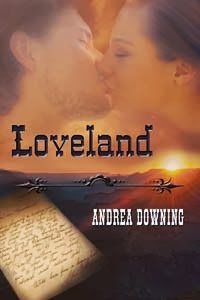
As we continue our look at various authors and their writing process, today we welcome Andrea Downing, author of the new book, Loveland. Andrea, you write historical fiction.  How do you combine your research with your writing process?  Did you fully research the time period first?
     First let me say thanks so much for asking me to join in this discussion, Rebecca.  Like most writers, I’m always anxious to get underway on my next project so I tend to view research with some trepidation, though that’s not to say I don’t enjoy it.  When writing Loveland, I first had to get the voices of the people and their language correct, so I read a load of memoirs of the period first.  However, once I had started the book, I was still doing research.  I’m a member of the Center for Fiction here in NYC so I went down there and made use of their many resources, getting the historical background for the time period as to what was happening in the country at large.  I didn’t fit in many historical events because they weren’t pertinent to the story, but it certainly gave me a feel for the time.  Finally, I took a trip out to the Loveland area in Colorado so my descriptive passages and place names could be correct.  So, to answer your question, no, I didn’t fully research the time period first.
  
How do you come up with your characters?  Do you develop them first or do you come up with a plot first?
     In Loveland, Lady Alex and Jesse were fully formed before a single word was written.  With my present 3 other books, the MO was different for each one.  I was on a ranch in NV and a young cowboy said to me that he thought his name was perfect for a western character in a book: Dylan Kane.  I was looking for something to write for The Wild Rose Press ‘Lawmen and Outlaws’ series and Dylan just became the lawman and Lawless Love evolved from there.  For my forthcoming story Dearest Darling for the ‘Love Letters’ series, I had the plot idea first.  And for the forthcoming novel, Dances of the Heart, I have absolutely no idea where that all came from—those people just walked in off the street and wrote it themselves.  


Do you fully outline your story before you start writing?
     No, though I’ll probably have to outline my WIP as it’s fairly complicated.  I did once do an outline for a book which I wrote but that ms is still ‘under the bed.’


How do you keep your stories true to your time period?
   To me, language is the absolute must.  I work with the etymological dictionary and check as much as I can.  Nothing takes me out of a story quicker than a glaring anachronism, especially a linguistic anachronism.  To be describing a character from the 1800s and talking about the hero’s “abs” or the heroine ”accessorizing” an outfit just drives me up the wall.  Of course, it is a matter of knowing what words to look up in the etymological dictionary and no one is perfect.  That’s where having a great editor comes in!


What made you want to write historical fiction?
    I grew up on a diet of television westerns and I think that era has always fascinated me.  People had a whole different set of standards, some of them better than today’s and, of course, some of them a lot worse—especially if you consider their treatment of minorities and their total disregard for preserving the world around them.  But I like to think of feisty women having to fight for what they want and men with a code of honor they struggle to live by.   


What advice would you give beginning writers who are interested in writing historical fiction?
     Do your research so you know what you’re doing.  Writing historical fiction is not just a matter of putting two characters in a different time setting; their actions and reactions, their language, their movement, their vision of the world at large---all of it would be different than today’s.


Thank you, Andrea, for giving us insight on how a historical author approaches the writing process when there is research necessary to make a story more realistic.  What about you?  How do you research for your time period books or for stories that require research?


Monday, February 17, 2014

Ideas to Story - The Writing Process

When I began asking other writers about their writing processes for classes I was teaching, I kept finding so many different answers.  I am always telling students not to worry if they feel their process might not work. The secret is to figure out what works for you.  Here are a couple more authors who have come up with their own writing process.


First we hear from Madeleine McDonald, author of The Rescued Heart, a newspaper columnist who made the change from non-fiction to fiction writing and made some discoveries about the writing process along the way.

Twenty years ago, in the days of print magazines, I was a freelance journalist. When I tried my hand at fiction, I had to learn a totally different craft. Instead of summarizing factual information for my readers, little by little, through a myriad of false starts and rejections, I learned to add mood and texture to the bare bones of a story idea. It took dedication, discipline and any number of rewrites. Today’s newspaper is tomorrow’s trash. Fiction involves a partnership with the reader, and it’s a lot more fun to write.
My first romance novel, Enchantment in Morocco, was published in 2010, followed by The Rescued Heart in 2013.

Madeleine raises a good point. Writing fiction is much different from non-fiction, though I discovered during all my years of writing TV news, that it was possible to find plenty of ideas from those real life stories. So where do ideas come from?

Let’s  hear from A. Y. Stratton who writes romantic suspense for The Wild Rose Press about her writing process. Her latest work is Buried Secrets.

The truth is I don’t have a writing process, unless you call this a process:
I am on a walk and see a workman loading a truck in a neighbor’s driveway. The man is young and fit, his shirtsleeves rolled up to reveal his muscles. Nice muscles. The box he’s carrying must be heavy because he’s sweating and it’s cool out. And he has a tarp over the box. The tarp covers up the writing that might reveal what’s in the box. I begin to suspect he’s stealing something from the neighbor, a lawn mower that was sitting on the grass or something from the back yard. Maybe a TV on the screened porch? All he has to do was use a razor to slit the screen and bang!  The loot is in his truck and off he goes. I should always have paper and pencil in my pocket, so I can write down a license plate number.
I’m at a clothing store, waiting to try on some slacks. The woman in front of me steps into the first available dressing room with at least a half dozen outfits draped over her arms. She’s in the dressing room for a long time. I suspect she’s putting all the items on beneath her other clothes.
When I can’t go to sleep at night, I make up stories, adventures with thieves like the workman and the woman, lovers like the ones I see whispering to each other in bars. And pretty soon I have a story. The workman is really a detective spying on the drug king who lives across the street from the construction site.  The woman in the department store is hiding from the man who has been following her. Why is he following her? To track down her parents who never returned from their vacation in Cuba.
As I began my latest published novel, Buried Secrets, I imagined two people hiding in a closet while a murder takes place in the bedroom. I loved writing that chapter. I had to figure out what they were doing there. The man was going to be my hero, so he had to be there for a good reason. And the woman had to be on a quest too, so that took some tricky plotting. Then I had to figure out how they would escape.
I go to a lot of Milwaukee Brewers games. While I’m there I wonder if the handsome rookie playing first base has a girlfriend back home in Arkansas. Maybe he has one in Milwaukee too. The women fans swamp him at the autograph sessions. He falls for a wealthy city girl who waits for him after the games. Who invites him out to her father’s boat on Lake Michigan and introduces him to her friends. I imagine her ex-boyfriend is jealous and plots to get the ball player drunk so he can plant drugs on him. And maybe… I really like this idea. I wonder what will happen next.
Conclusion? I am a confirmed *pantser.
*A person who writes stories by the seat of her pants, without an outline or a character list.  
So whether it’s a pact with your readers or writing by the seat of your pants, the secret to the right writing process is there is no “secret.” Find out what works for you and go for it.
If you have a writing process you’d like to share, please email me at rebecca.grace@aol.com. I’d love to hear from you or feature your process on Write That Novel.


Writing in the New Year

Every year don’t we all as writers make promises to ourselves to write more in the New Year? This will be the year when we get another book ...