Showing posts with label writing process. Show all posts

Monday, March 24, 2014

Points of Pain in Character Development

This is characters' month at Write that Novel and our guest today is romance author, Vonnie Davis.

Thanks for having me here as your guest today. I’ve been looking forward to my visit. Frankly, it gives me a chance to step out of my writing cave, squint at the sunlight and share some ideas with you. I was fortunate enough to retire early as a technical writer and, in the four years since, I’ve been writing various sub-genres of romance fulltime and enjoying every minute of it. I began as a writer with The Wild Rose Press and have eight titles with them. Now I write exclusively for LoveSwept/Random House and HarperImpulse, not because I wasn’t treated well at TWRP, for I was, but because contracts with the larger houses tend to tie you up with exclusivity and non-competitive clauses.
An important part of our writing process is character development, and we each have our own ways of creating and developing the people who will populate our stories. Whatever works for you is right for you. Because I write about four books a year, my process is short and simple.

I create my characters from the inside out.

I begin with the heroine and hero’s points of pain. Points of pain, we’ve all got them. Those sad and horrible events of our past, either from our childhood or even last year, that have altered our perception of life and the world around us.

Perhaps your parents divorced when you were young. That would be your point of pain. Did a dog attack you, making you fearful of animals? Or perhaps you were the middle child with a beautiful older sister, who always got her way, and a younger, charming one that everyone adored. You were the invisible daughter, unless something went wrong. That was your point of pain. Maybe you were teased as a teenager because of your weight. Or you were brutally attacked as a young adult. Or abandoned by your spouse to raise your small children on your own (Single mom of three waving her hand here and believe me when I say, it took me twelve years to trust again). All these classify as points of pain and, as such, affect how you and I react to others and certain situations.
The same holds true for our characters. So, we must initially know our heroine and hero’s point of pain, no matter how large or small. Maybe our hero was looked down upon because he lived on the wrong side of the tracks and he returns to his hometown years later as a millionaire. We can come up with hundreds of ways pain can be inflicted. In Those Violet Eyes, my hero lost part of his leg in the war in Iraq.

From here we decide, the inner strength of our hero and heroine. What have they done with their point of pain? Has it weakened them or made them stronger? Has the middle, ignored daughter become a bitter woman, blaming everything wrong in her life on someone else? Or has she worked hard to shine in her own right? Has our hero from the wrong side of the tracks turned into a wife-beating drunk or an ambitious businessman? My hero in Those Violet Eyes chose to open a ranch for children with amputee limbs. Has the abandoned mother worked nights to attend college during the day to get her degree to provide a better life for her children? (Degree waving momma here!)Because you see, we all have the choice to react negatively or positively to any situation—and so do our characters.
Then I decide their likes and dislikes. If your heroine was sexually attacked while wearing a pink sweater, would she refuse to wear pink ever again? If your hero went to bed hungry many a night as he was growing up, could he ignore a hungry dog? What are their push buttons. We all have those too. I can’t stand to hear a man verbally abuse his wife or hear a parent call a child nasty names. I get irritated with women who chose to be a man’s doormat. My heroines are always feisty; they turn adversities into advantages.

What things will your characters love and hate? Music?Do they prefer the quiet of classical music to relax or chest-thumpin’ music so loud it drowns out the bad thoughts? Junk food?Do they reach for that tub of ice cream when they’re upset or, as someone teased for their weight earlier in life, do they obsess over every calorie they put in their mouths? Sports?Religion?Education? Love of art? All these things become layers to their personalities. And as I layer them from the inside out, they’re slowly coming to life.
How has a character’s past history and personal choices affected his or her choice of career? Suppose we have a teenager lose a father from an unexpected heart attack. Have the heart attack happen while the father was shooting hoops with the tall teenager and we have a very real point of pain. Two, actually.The sudden loss of a parent and the feeling that maybe if Dad hadn't been shooting hoops in the driveway, he wouldn't have died. The teenager might even harbor guilt that he caused his dad's death. To assuage this guilt, the kid decides to become a doctor, a cardiologist. Every aspect of his life is dedicated to being the best doctor he can be. Can you see how this person is driven by his point of pain?

Since I’m a person with quirks, I love giving a quirk or two to my characters. It’s a lesson I learned from Shakespeare. He was a master at providing a bit of comedic relief. So, if I have a serious, no nonsense, uptight character, I toss in a quirk to make him or her more likable, more human, more like us. And if I can make my readers chuckle over the quirk, then I’m in writer’s heaven because I love a good laugh.
Lastly, I think about his or her appearance. Because it’s what’s inside that counts. It’s their heart and soul and points of pain that drive the story, not the color of their eyes or the size of their pecs. Although those things are nice, too. I just save those goodies for last.

I’d like to share an excerpt from Santa Wore Leathers, a novella from HarperImpulse and the kickoff for a series of books about the men of fire and marine rescue Station Thirty-Two. The series is entitled Firemen’s Wild Heat. I’m writing book one now about Wolf’s youngest sister and one of his co-workers.
But in this novella, the romantic couple is Wolf and Becca.Wolf’s point of pain? His parents were both killed in a fire while he was serving as a SEAL. He resigned his commission to come home to Florida to care for his four teenage sisters, who are now grown, yet remain an active part of his life. Becca’s point of pain? Both her father and her ex-husband walked out on her, so she’s an uptight, prickly man-shy woman who gives her love to a German shepherd, Einstein…

                   Two miles later they returned to Seashell Lane, jogging toward home in her gulf-side community on the northern fringes of Clearwater, Florida.Becca loved her neighborhood, a comfortable blend of retirees and small families. Her gaze swept to the town house next to hers. At least, until two weeks ago, when her new neighbor with his constant stream of female visitors moved in. The man went through women quicker than her ex-husband.
                  Just then his door opened, and man-whore stepped out on his small front porch. In a purely feminine reaction, she reached to smooth back her hair. Suddenly, Einstein wrenched his leash from her grip and took off.
                 “Einstein! Einstein, stop!” She sprinted after her errant dog.
                 Her neighbor pivoted. Einstein leaped, knocking him back against the door. “Whoa, there big guy!” He accepted the canine kisses and aimed dark eyes at her. “Is he yours? He’s some dog.” His large hands ruffled Einstein’s fur. Firm biceps flexed under her neighbor’s black Harley T-shirt, and the bottom of a wicked tribal tattoo peeked from beneath his right sleeve.
               “Yes. I’m sorry he jumped on you. He never takes off like that.” No doubt one dog recognized another.
                 “Man, I’d love a dog like him. A man’s dog, you know? I’ve got a cat. Not by choice, though. When my sister went off to college, she left Fluffy with me.”
                 Man-whore aimed a wide smile at her, his perfectly straight teeth a contrast to his tan. A dimple winked. The fact he only had one dimple was the singular flaw on his flawlessly handsome face. Now that she was within five feet of him, she could clearly examine his features. Having watched him through her window from time-to-time, she knew he was tall and muscular. But up close, she realized he had the body of a serious weight lifter. His long, dark brown hair was brushed straight back. The skin crinkled at the corners of espresso-colored eyes when he smiled, which he seemed to do easily and frequently. Yet, it was the vision of him holding a cat named Fluffy that nearly made her smile. Muscle man and putty cat.
                “You live next door, don’t you?” He jerked his head toward her home.
                 She bent to grasp the end of her dog’s leash. “Yes, I do.”
                He extended his hand when she straightened. “Dan Wolford.” His dimple flashed again and his smile did all kinds of twitchy things to her insides. “Most people simply call me Wolf.”
                I’ll just bet they do.
               She glanced at his hand for a second. No need to be rude, even if she didn’t care for his cavalier attitude toward women. She did the polite thing. “Welcome to the neighborhood, Dan.”
               "Wolf, please.” His large paw enveloped hers, and warmth spread upwards from her stomach, did a backflip and then dove downwards. Meanwhile, his dark gaze assessed her entire body and face, as if she were the most dazzling woman in sweaty running clothes he’d ever seen. His solitary dimple winked along with his thousand-watt smile. One dark eyebrow rose as if he were waiting for her to share her name. She wasn’t sure why she hesitated. She was reluctant.  Fueled by his cocksure attitude, no doubt. Now there was a cliché, if ever she’d heard one.
                  His thumb rubbed slow, lazy circles over her knuckles detonating sensual signals straight to her core. Oh, he was good at this magnetism stuff.
                   Wolf glanced at her prancing, panting dog. “Einstein, does your owner have a name? It looks like she’s not sharing today.”
                    Oh, for Pete’s sake.
                   Einstein whined, his tongue lolling crooked from his mouth.
                   “Huh, looks like Einstein’s not talking either.” She tugged her hand free. “Excuse me. I have Christmas shopping planned for this afternoon. I better get going.” She pivoted toward her front door.
                     “Have a good day, Becca Sinclair.” His deep voice washed over her, sending an annoyed shiver up her spine. So the man knew her name all along and was just playing dumb. Was that sneaky arrogance or stalker creepy?
                     She glared at him over her shoulder. “If you knew my name, why’d you make a big deal out of asking for it?”
                     He shrugged and looked down for a beat before aiming his dark eyes at her again. “When a man finds a strange woman attractive, he asks around until he finds out something about her. Mrs. Minelli, two doors down, fears you’ve been pining away for your ex-husband.”
                    Sneaky stalker creepy.
                   She turned, snapped her fingers once and Einstein sat at her feet before she planted her hands on her hips. “I don’t appreciate being the topic of neighborhood gossip, Dan Wolford.”

Please visit me at my website: www.vonniedavis.com or my blog www.vintagevonnie.blogspot.com

Thanks, Vonnie, for sharing your ideas about your characters.  And thank you for introducing us to two of them who sound so intriguing they make us want to read the book.


Monday, March 3, 2014

Characters and the Writing Process

All this month we have been checking in with other writers to see how they confront the writing process. It has been interesting and they prove the point we keep making over and over. No two writers will approach writing their books exactly the same.  Many don't even approach writing their own books the same every time they set out to work on a new story.

Most often the story dictates how it is written, or as others have said, their characters might be the determining factors in how the writer approaches the book. 

Today, as we wrap up this informal look at the writing process we hear from historical romance writer, Margaret Tanner of Australia. Her latest book is Haunted Hearts.

Margaret, tell us a little about your writing process. How do you come up with your plots?
Because I love Australian history, in fact all history, plots abound in my fertile imagination, but I do seem to get my best plot ideas in the middle of the night. I write them down, (pen and paper by my bed), so I won’t forget them. I usually take a historical event to use as my main background and then manufacture some catastrophic, life changing event for the main characters. What could they do to stop it? How will it change them and those around them?

How do you develop your characters?
I develop my characters to fit in with the era I am writing about. I normally don’t write character profiles, except for the briefest of outlines, but I try to walk in their shoes so to speak, and to get inside their head.

How do you develop heroines, heroes and villains?
My heroines are resourceful, not afraid to fight for her family and the man she loves. I want my readers to be cheering for her, willing her to obtain her goals, to overcome the obstacles put in her way by rugged frontier men. For my heroes, I like them to be dark and tortured. They might be seeking revenge, trying to consolidate their fortunes, but all of them will have something in their backgrounds, some dark deed that has tainted their lives. As for my villains, I like them to be evil with no redeeming features.

Thank you, Margaret for giving us some insight into your writing. Where can readers visit you online?


Now that we have looked at the various ways writers approach their work, let's turn to characters. Starting next week our focus will be on how writers come up with their great characters and we'll introduce some of the wonderful story people out there.


If you would like to leave a comment about your writing process or ask a question or make a comment for Margaret, please do so.

Monday, February 24, 2014

Research and the Writing Process


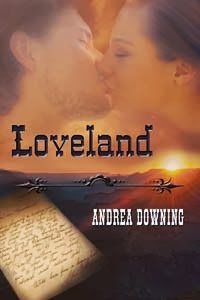
As we continue our look at various authors and their writing process, today we welcome Andrea Downing, author of the new book, Loveland. Andrea, you write historical fiction.  How do you combine your research with your writing process?  Did you fully research the time period first?
     First let me say thanks so much for asking me to join in this discussion, Rebecca.  Like most writers, I’m always anxious to get underway on my next project so I tend to view research with some trepidation, though that’s not to say I don’t enjoy it.  When writing Loveland, I first had to get the voices of the people and their language correct, so I read a load of memoirs of the period first.  However, once I had started the book, I was still doing research.  I’m a member of the Center for Fiction here in NYC so I went down there and made use of their many resources, getting the historical background for the time period as to what was happening in the country at large.  I didn’t fit in many historical events because they weren’t pertinent to the story, but it certainly gave me a feel for the time.  Finally, I took a trip out to the Loveland area in Colorado so my descriptive passages and place names could be correct.  So, to answer your question, no, I didn’t fully research the time period first.
  
How do you come up with your characters?  Do you develop them first or do you come up with a plot first?
     In Loveland, Lady Alex and Jesse were fully formed before a single word was written.  With my present 3 other books, the MO was different for each one.  I was on a ranch in NV and a young cowboy said to me that he thought his name was perfect for a western character in a book: Dylan Kane.  I was looking for something to write for The Wild Rose Press ‘Lawmen and Outlaws’ series and Dylan just became the lawman and Lawless Love evolved from there.  For my forthcoming story Dearest Darling for the ‘Love Letters’ series, I had the plot idea first.  And for the forthcoming novel, Dances of the Heart, I have absolutely no idea where that all came from—those people just walked in off the street and wrote it themselves.  


Do you fully outline your story before you start writing?
     No, though I’ll probably have to outline my WIP as it’s fairly complicated.  I did once do an outline for a book which I wrote but that ms is still ‘under the bed.’


How do you keep your stories true to your time period?
   To me, language is the absolute must.  I work with the etymological dictionary and check as much as I can.  Nothing takes me out of a story quicker than a glaring anachronism, especially a linguistic anachronism.  To be describing a character from the 1800s and talking about the hero’s “abs” or the heroine ”accessorizing” an outfit just drives me up the wall.  Of course, it is a matter of knowing what words to look up in the etymological dictionary and no one is perfect.  That’s where having a great editor comes in!


What made you want to write historical fiction?
    I grew up on a diet of television westerns and I think that era has always fascinated me.  People had a whole different set of standards, some of them better than today’s and, of course, some of them a lot worse—especially if you consider their treatment of minorities and their total disregard for preserving the world around them.  But I like to think of feisty women having to fight for what they want and men with a code of honor they struggle to live by.   


What advice would you give beginning writers who are interested in writing historical fiction?
     Do your research so you know what you’re doing.  Writing historical fiction is not just a matter of putting two characters in a different time setting; their actions and reactions, their language, their movement, their vision of the world at large---all of it would be different than today’s.


Thank you, Andrea, for giving us insight on how a historical author approaches the writing process when there is research necessary to make a story more realistic.  What about you?  How do you research for your time period books or for stories that require research?


Monday, February 17, 2014

Ideas to Story - The Writing Process

When I began asking other writers about their writing processes for classes I was teaching, I kept finding so many different answers.  I am always telling students not to worry if they feel their process might not work. The secret is to figure out what works for you.  Here are a couple more authors who have come up with their own writing process.


First we hear from Madeleine McDonald, author of The Rescued Heart, a newspaper columnist who made the change from non-fiction to fiction writing and made some discoveries about the writing process along the way.

Twenty years ago, in the days of print magazines, I was a freelance journalist. When I tried my hand at fiction, I had to learn a totally different craft. Instead of summarizing factual information for my readers, little by little, through a myriad of false starts and rejections, I learned to add mood and texture to the bare bones of a story idea. It took dedication, discipline and any number of rewrites. Today’s newspaper is tomorrow’s trash. Fiction involves a partnership with the reader, and it’s a lot more fun to write.
My first romance novel, Enchantment in Morocco, was published in 2010, followed by The Rescued Heart in 2013.

Madeleine raises a good point. Writing fiction is much different from non-fiction, though I discovered during all my years of writing TV news, that it was possible to find plenty of ideas from those real life stories. So where do ideas come from?

Let’s  hear from A. Y. Stratton who writes romantic suspense for The Wild Rose Press about her writing process. Her latest work is Buried Secrets.

The truth is I don’t have a writing process, unless you call this a process:
I am on a walk and see a workman loading a truck in a neighbor’s driveway. The man is young and fit, his shirtsleeves rolled up to reveal his muscles. Nice muscles. The box he’s carrying must be heavy because he’s sweating and it’s cool out. And he has a tarp over the box. The tarp covers up the writing that might reveal what’s in the box. I begin to suspect he’s stealing something from the neighbor, a lawn mower that was sitting on the grass or something from the back yard. Maybe a TV on the screened porch? All he has to do was use a razor to slit the screen and bang!  The loot is in his truck and off he goes. I should always have paper and pencil in my pocket, so I can write down a license plate number.
I’m at a clothing store, waiting to try on some slacks. The woman in front of me steps into the first available dressing room with at least a half dozen outfits draped over her arms. She’s in the dressing room for a long time. I suspect she’s putting all the items on beneath her other clothes.
When I can’t go to sleep at night, I make up stories, adventures with thieves like the workman and the woman, lovers like the ones I see whispering to each other in bars. And pretty soon I have a story. The workman is really a detective spying on the drug king who lives across the street from the construction site.  The woman in the department store is hiding from the man who has been following her. Why is he following her? To track down her parents who never returned from their vacation in Cuba.
As I began my latest published novel, Buried Secrets, I imagined two people hiding in a closet while a murder takes place in the bedroom. I loved writing that chapter. I had to figure out what they were doing there. The man was going to be my hero, so he had to be there for a good reason. And the woman had to be on a quest too, so that took some tricky plotting. Then I had to figure out how they would escape.
I go to a lot of Milwaukee Brewers games. While I’m there I wonder if the handsome rookie playing first base has a girlfriend back home in Arkansas. Maybe he has one in Milwaukee too. The women fans swamp him at the autograph sessions. He falls for a wealthy city girl who waits for him after the games. Who invites him out to her father’s boat on Lake Michigan and introduces him to her friends. I imagine her ex-boyfriend is jealous and plots to get the ball player drunk so he can plant drugs on him. And maybe… I really like this idea. I wonder what will happen next.
Conclusion? I am a confirmed *pantser.
*A person who writes stories by the seat of her pants, without an outline or a character list.  
So whether it’s a pact with your readers or writing by the seat of your pants, the secret to the right writing process is there is no “secret.” Find out what works for you and go for it.
If you have a writing process you’d like to share, please email me at rebecca.grace@aol.com. I’d love to hear from you or feature your process on Write That Novel.


Monday, February 10, 2014

The Writing Process

This month our focus is on the writing process. I started thinking about it because I am currently teaching a class at Savvy Authors to new writers where we start from scratch. Every time I teach one of these classes where we start from scratch I am amazed at how many different methods writers use to get their novel started. I decided to ask some of my published friends how they got started and this month I am posting some of the answers. We start off today with Rolynn Anderson, the author of the new book, Lie Catchers.


How do you create your characters? Do you have a specific method?
My process is haphazard at best, in the beginning, but as I proceed with the plot, I pick characters with purpose: people who act as foils to my hero/heroine, and individuals who trip them up…people who push the action and challenge the h/h.  For LIE CATCHERS, I was charmed by the fact that in Petersburg, Alaska, Norwegian men, displaced from their homeland, traveled to Alaska to become fishermen.  Some of them married Tlingit (native) women.  In a gift store in Petersburg, Alaska, I met the owner, who happened to be a “Tlingwegian.”  She was blonde and blue-eyed but with a warm complexion.  My heroine was born with that encounter.
 
Do your characters come before the plot?
Not a linear process, for sure.  As I develop the plot that challenges my h/h, I grab new characters off the ‘shelf,’ adding to the complexity of the plot.  I like to surprise the reader and challenge myself as a writer with “out of the box” tactics.  In LIE CATCHERS, for instance, I found out that Petersburg, Alaska, was burdened with a 1932 unsolved homicide.  What’s more, the man murdered was an important Chinese man…in a Norwegian town.  That caught my interest.  I wondered if I could solve an old crime and a new one, comparing the way crimes were handled in 1932 to how we work them today…and somehow tie in both crimes.  The challenge was too delicious to pass up! 
 
Do you know how the story will end before you begin? 
Absolutely not.  I may not know how it’s going to end before I’m 85% into the book.  I like surprise endings, so I tend to work to the denouement and surprise myself with a turnabout climax.  One thing I do know about the ending of a stand-alone novel…the h/h are stretched, learn and grow, finding that together, their skills, love and verve are unbeatable.


Do you choose settings you know or do you have books of settings and plans of plots sitting around?
Settings drive me to write a book even more than character or plot ideas.  I cruised to Petersburg, Alaska, in my trawler two years ago.  Had never been there before.  Did not know the town was full of Norwegians (my heritage).  Was not aware Norwegians settled in Alaska to fish (as did the Russians, etc.).  LIE CATCHERS was born out of my surprise and delight in discovering this charming fishing town, full of people who looked like me, ate food I liked, said ‘uff da’ the way I say it.  Okay, there’s a bit of narcissism here, but finding this town, set below the LeConte Glacier, really got my writing juices flowing! 
 
Where do you do your research?
Books and online.  I bought books about Petersburg in the town’s bookstore and connected with people in Petersburg to help me answer some questions about the town, but most of my research (especially about the 1932 murder) was done on line.  I e-mail individuals regularly, as well.  I have a cadre of experts I consult about forensics, for instance.  Don’t know what I’d do without all that free advice!


Are you a draft writer or do you revise as you go along and why? Do you sketch out your plot or do you let the characters develop the route to the end?
I’m a pantser through and through, which takes more time, but is more satisfying to me.  I like to be surprised every morning when I get up to write.  I never know where my writing will take me each day…and I love that feeling!

Thank you, Rolynn for telling us about your writing process.  Can you provide a blurb and information about the Lie Catchers?


LIE CATCHERS
Website: http://rolynnanderson.com/         
Blurb: Two unsolved murders will tear apart an Alaska fishing town unless a writer and a government agent reveal their secret obsessions.
Treasury agent Parker Browne is working undercover in Petersburg, Alaska to investigate a money scam and a murder. His prime suspect, Liv Hanson, is a freelance writer struggling to save her family’s business. Free spirited, full of life, and with a talent for catching liars, she fascinates Parker.
Trying to prove she’s a legitimate writer who cares about Petersburg’s issues, Liv pens a series of newspaper articles about an old, unsolved murder. When her cold case ties in with Parker’s investigation, bullets start to fly.


Parker understands money trails, and Liv knows the town residents. But he gave up on love two years ago, and she trusts no one, especially with her carefully guarded secret. If they mesh their skills to find the killers, will they survive the fallout?


A 5 STAR REVIEW:
A Rich, Intriguing Story December 27, 2013-Amazon Kindle
By Roben
I received an ARC of this book, and was thrilled to read it. I adored the setting, and the quirkiness of the characters in the small Alaska town. It made me want to go to Alaska. That kind of authenticity comes from an author who knows her setting, who understands its people, and can then convey that knowledge richly. Anderson does just that. Her mystery/suspense, is carefully woven with the right amount of history to engage the reader, and enough mystery to keep the reader guessing. This was my first novel by Rolynn Anderson, and I would definitely read this author again.
EXERPT:
       Parker touched her shoulder.
       “May I have this dance?”
       Liv twirled to find him so close she could smell beer on his breath. A hint of cologne. Had he shaved recently? Smiling at the thought he might have done that for her, she gave him her right hand and rested her left hand on his shirt collar, intent on finding a way to  touch his chin to answer the shaving question. But the shave-or-not dilemma was a minor one.  She’d already screwed up with one man tonight; would she make a wrong move with Parker, too?  
      She drew her thumb along his chin and sighed at the silky smoothness. Forget the man’s mouthful of queries and his intense gaze. Just dance. While the singer lamented over loosing her mind, Liv’s body disappeared into Parker’s. Soothed, she was and aroused at the same time, aware Parker knew not to use words. A close shave and a close dance spoke volumes. She was the silent one, afraid to say what might start an avalanche of sentences, lowering her guard, exposing too much to the wrong person at the worst time. This man who held her was a cop and she was on his list of murder suspects. Even if Parker was unorthodox as an investigator, he still held the power of his profession. The reason for his offer to dance wasn’t clear, was it?
       The strumming ended, emptying the room of the singer’s piercing ballad.
       “Good night, Liv. And thank you for the dance.”
       Parker kissed her on the forehead, walked out the door and closed it quietly, taking with him all the unasked questions she would never answer.

Thanks again, Rolynn for sharing your new book with us as well as your writing process.

What about you? Please feel free to share how you initially start planning a new book.  

Writing in the New Year

Every year don’t we all as writers make promises to ourselves to write more in the New Year? This will be the year when we get another book ...