Showing posts with label historical fiction. Show all posts

Monday, October 10, 2016

5 Tips to Researching your Fiction

I am always on the lookout for new places to conduct research on whatever project I might be working on. Even though I might be writing fiction it's important to get the details down right when describing a real location or event. We can afford to make up our dystopian worlds. We can't afford to ignore reality completely. Some of the things we do might seem obvious, but even those obvious places to look can hold hidden gems that we can find to make our work unique if we look far enough. We need to be able to look beyond just what is around us for other ways to conduct research.


1. Using the Internet.  Ever since I discovered the internet it has been a wonderful source of research material for me. What could be easier than typing on the keyboard and suddenly whole new worlds open up. We can go back in time, we can look at pictures of far away places, we can look up any subject we might desire.  But go beyond generic places like wikkipedia or google or bing. If you're going to research the Gold Rush in California, look up state locations that list maps or find pictures from the time. Look for thesis material or other research that others have done that you might be able to use to learn more about the time and the setting.


2. Don't ignore the library.  I always enjoy spending time in libraries and just like with the internet the material might all be there in front of you but again, go beyond the main, obvious research tools. Look for texts or books that might be different than what you would find in other locations. Probably the best thing about going to the library is the presence of the librarian. Ask questions. These people always seem to know where you can find anything and everything.


3. Research the location from a distance with whatever is available. Yes, I know we can't necessarily take a trip to Tibet, but look for other small ways to research the location in your own location. Check out communities to see if there is place you might visit that would give you a feel for a place or its people. We're talking restaurants or stores watch for a museum show that might give you what you need to learn. Ask around for people who might know someone who is an expert or from that country.


4. Take a trip to the actual location. This is not always possible, especially if you are writing historical novels where it is not only a question of distance, but also time. Museums are of course always a good idea because you can see artifacts from a certain time period of place.

Recently I got the opportunity to visit the inside of old Fort Bent, Colorado, a location that figures into a book I am writing that was actually only a few miles from where I grew up. The fort was originally built by the Bent brothers as a trading post along the Santa Fe trail. It was a busy post at its prime.

It has been restored to resemble the early days of Colorado. Now visitors can see what life was like in the early days and hear stories of the past from tour guides who have been specifically trained for the parts of their past personas. It gave me a real feel for being in the Old West.  


5. Take a class in the subject. Local community colleges often offer classes that might give you an opportunity to take part in textiles from around the world or photography or a class on biology might give you insight for a project involving a biologist.  If you're writing a police story, take a citizen's academy where you can learn the proper procedure a police officer might use. 

These are just a few local places you can learn to do research without going too far from home. We'll look at more ways to conduct research in the future, but this should get your story started.


Monday, February 2, 2015

5 Tips on Research

.Research can be both a wonderful tool or a curse for writers.  We don’t get all the way through any book without at least a little bit of research. We don’t know everything off the tops of our heads. These days Google, Bing, Wikkipedia and the whole internet are right at our fingertips. They can bring us information on just about anything we want, but sometimes we rely on them too much and forget about the rest of the world out there that can help us with our research. Don’t get me wrong, I think it’s great that I can look up New Mexico treasure stories right on my computer for my newest romantic suspense, but that can’t be the only place I get answers. I’ve also made trips to the area of northern New Mexico that I’m writing about so I can experience first hand the area I’ll be describing.

But there are places closer to home you can visit or research without taking trips or relying solely on the internet.

1.      Don’t forget your local library and librarian.  Yes they have books there that you can probably look up online, but they also might have old newspaper files so you can go back and actually read the newspaper stories from a certain time period. And yes, you can probably see the old stories online, but how long does it take you to find them? Sometimes the librarian can be just the ticket to easy research. They seem to know everything or where to find it.  Libraries can be great resource for genealogy too and looking at old family trees.

2.      Museums – This is another place that you probably think you don’t need because the internet can give you such quick access to information. But sometimes it is great to look at the actual objects from a certain time period. Any sort of historical writing can be helped with a visit to an actual location where you can see the real objects that were used in a certain time. Whether you’re looking at whale bones, dinosaur skeletons, Native American head gear or rocks from the moon, seeing things first hand can help with a description or just give a writer a better feel for an object or time period. Look at the material from the 1800’s. Imagine  wearing those clothes and how it felt to put them on. 
 
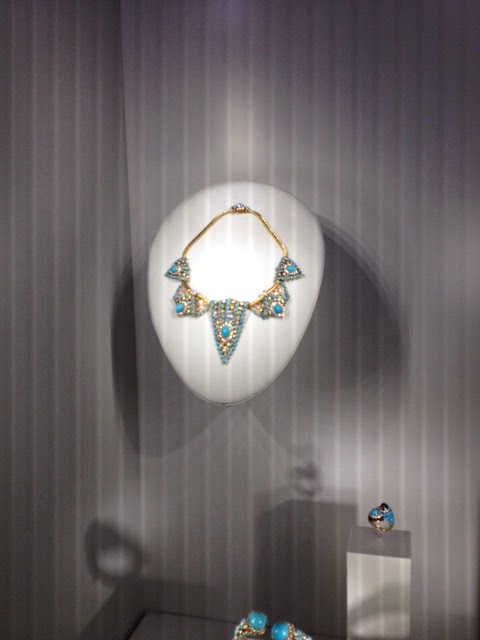
       Last month I had  great time visiting the Denver Art Museum to see the Cartier exhibit, Brilliant. What a fascinating show that is.  The diamond tiaras were so brilliant they couldn't even be photographed. I managed to get pictures of a few items, but most were so absolutely dazzling they were impossible to capture because of their brightness. Seeing the exquisite designs and pieces of jewelry gave me wonderful ideas for describing elegant jewelry at a ball in an upcoming story.

3.      Graveyards – This can be eerie and some friends have laughed because I admit I will sometimes visit graveyards in other cities. You can learn a lot about time periods, especially if you are writing historical pieces. Visiting a graveyard in Salem, MA really brought home the witch trials too me. And visiting Arlington National Cemetery was very sobering.

Visiting cemeteries can also give you an idea of the various names that were used in certain time periods, and you can see the difference in how people approached death in different generations.

4.      Local Police & courtrooms  – these are good for writing current stories because they can alert you to things like the booking process for criminals or crime issues. Many police departments have public liaisons who can help with crime research and don’t forget many offer police academies that might take you on a ride along.

5.      Local parks – these are more my getaways when I just want to get the feel for the weather. But walks in the park can also help me with plot problems.  I have some time to think through what my characters are doing and when I come home I am ready to buckle down and write that scene.

So get out of your office and do some fun research other than burying your nose in the internet all the time. You might even come up with some new story ideas.


Monday, February 24, 2014

Research and the Writing Process


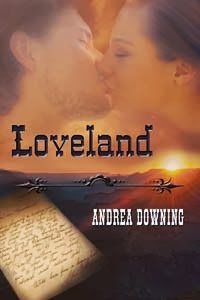
As we continue our look at various authors and their writing process, today we welcome Andrea Downing, author of the new book, Loveland. Andrea, you write historical fiction.  How do you combine your research with your writing process?  Did you fully research the time period first?
     First let me say thanks so much for asking me to join in this discussion, Rebecca.  Like most writers, I’m always anxious to get underway on my next project so I tend to view research with some trepidation, though that’s not to say I don’t enjoy it.  When writing Loveland, I first had to get the voices of the people and their language correct, so I read a load of memoirs of the period first.  However, once I had started the book, I was still doing research.  I’m a member of the Center for Fiction here in NYC so I went down there and made use of their many resources, getting the historical background for the time period as to what was happening in the country at large.  I didn’t fit in many historical events because they weren’t pertinent to the story, but it certainly gave me a feel for the time.  Finally, I took a trip out to the Loveland area in Colorado so my descriptive passages and place names could be correct.  So, to answer your question, no, I didn’t fully research the time period first.
  
How do you come up with your characters?  Do you develop them first or do you come up with a plot first?
     In Loveland, Lady Alex and Jesse were fully formed before a single word was written.  With my present 3 other books, the MO was different for each one.  I was on a ranch in NV and a young cowboy said to me that he thought his name was perfect for a western character in a book: Dylan Kane.  I was looking for something to write for The Wild Rose Press ‘Lawmen and Outlaws’ series and Dylan just became the lawman and Lawless Love evolved from there.  For my forthcoming story Dearest Darling for the ‘Love Letters’ series, I had the plot idea first.  And for the forthcoming novel, Dances of the Heart, I have absolutely no idea where that all came from—those people just walked in off the street and wrote it themselves.  


Do you fully outline your story before you start writing?
     No, though I’ll probably have to outline my WIP as it’s fairly complicated.  I did once do an outline for a book which I wrote but that ms is still ‘under the bed.’


How do you keep your stories true to your time period?
   To me, language is the absolute must.  I work with the etymological dictionary and check as much as I can.  Nothing takes me out of a story quicker than a glaring anachronism, especially a linguistic anachronism.  To be describing a character from the 1800s and talking about the hero’s “abs” or the heroine ”accessorizing” an outfit just drives me up the wall.  Of course, it is a matter of knowing what words to look up in the etymological dictionary and no one is perfect.  That’s where having a great editor comes in!


What made you want to write historical fiction?
    I grew up on a diet of television westerns and I think that era has always fascinated me.  People had a whole different set of standards, some of them better than today’s and, of course, some of them a lot worse—especially if you consider their treatment of minorities and their total disregard for preserving the world around them.  But I like to think of feisty women having to fight for what they want and men with a code of honor they struggle to live by.   


What advice would you give beginning writers who are interested in writing historical fiction?
     Do your research so you know what you’re doing.  Writing historical fiction is not just a matter of putting two characters in a different time setting; their actions and reactions, their language, their movement, their vision of the world at large---all of it would be different than today’s.


Thank you, Andrea, for giving us insight on how a historical author approaches the writing process when there is research necessary to make a story more realistic.  What about you?  How do you research for your time period books or for stories that require research?


Writing in the New Year

Every year don’t we all as writers make promises to ourselves to write more in the New Year? This will be the year when we get another book ...