Monday, August 21, 2017

5 Tips to Vacation Writing

Earlier this summer I gave tips on summer writing and I've done some tips on writing when you're out of town or distracted, but now is the height of summer vacation. How can you keep your writing groove on when faced with trips, tours or just sitting on the beach or up in the mountains and relaxing. Who wants to put your nose to the grindstone when you can be playing or visiting with friends or relatives? Well, yes, you can put those trips to good use, very good use.

1. Make your trip count. Take that trip to some place you've always wanted to write about or some place you've read about that you've always wanted to visit. Visiting a new place always can foster new story ideas or new places to set your book.  Take that trip to Hawaii or Europe and use the location, but summer vacation can be a great time to get in some writing while you are sitting at the beach and soaking in the sun. Take a trip to the beach at sunset and enjoy the last rays of the day, or sit in an outdoor cafe and observe the people and listen to the special sounds of that particular place. Because let's face it, whenever your are on the road, you should....

2. Observe your particular location. When I say observe, think about how you would describe it as
you are writing a story. Or better yet, write a travel story about it. Whenever I go to a new place I immediately go through all the information at the hotel to see any local tourist destinations, but I also look for those different little places. Ask around in the hotel coffee shop or the cab or Uber driver about any interesting but not tourist-y place that you might visit. I also like to learn about local sports stars, historical figures or heroes,  to get a feel for the people from there and to get more ideas for characters.

3. Try those little dining spots that are not necessarily in the tourist guide books. Look for the local coffee shops in the neighborhoods or the small diners or ethnic food places. Try them out. It not only will enhance the vacation, but can also be good food for thought next time you are writing a book.

4.  Talk to the local people. Pick up on any local accents, the way people dress,  even the items on the local menus. When I was travelling across the country with my family we made it a rule that we were going to eat whatever the local delicacies were. From Texas to Maine we enjoyed Mexican food and steak in Dallas, then Cajun in Louisiana, all the way up to crab in Baltimore and lobster in Maine.  We even had to stop by in Hershey, Pa and buy chocolate.

5. Keep a travel notebook and make good notes. And keep taking them, and updating and updating. When we went across country my mother started taking notes the minute we left Colorado and crossed over into Kansas. She had great notes on the farms of Kansas and even listed all the foods we had those first days. By the time we reached the East coast she had lots of blank pages and was trying to remember instead of instantly writing as she witnessed things.

So enjoy your summer vacation, but keep notes and pictures, and if you aren't a photographer, buy postcards. I began collecting postcards the minute I left home for college. I have cards from all 45 states I've visited -- from Maine to the Gulf of Mexico, from the Atlantic to the beaches of Hawaii and the glaciers of Alaska.

Enjoy your summer trip, and if you find yourself sitting and waiting at an airport or on a long plane ride, try some writing to fill the time. Or pick up a book by a new author or try reading in a new genre.

There's always lots you can do before getting back to work on your next book.

Monday, August 7, 2017

5 Tips to Plotting

Is there anything more intimidating to a fiction writer than a blank piece of paper or a blank screen? What do you do with it?

This past weekend I was lucky enough to present my ideas for my plotting methods to my Sisters in Crime - Colorado group.  This is a wonderful organization and our Colorado chapter has a great group of writers.  The sessions are always good for generating ideas and for tossing out new ideas when someone is having trouble with their current work in progress.

As I planned my portion of my plotting session I got to thinking about not only my particular haphazard method of plotting but how much I have learned about the overall plotting process through the years.  When I first started writing I began by simply sitting down with a blank notebook, a pencil and a vague idea in my mind. I had one character and I had no idea what she was going to do. My first story ever was about a teenager who got kidnapped with a rock star. I think I had Herman from Herman's Hermits in mind when I wrote it.  But I started out by writing a scene. Strangely enough I still write that way. When I get bogged down is when I start planning so many scenes in advance and then my mind doesn't seem to want to write them. That made me start thinking about the entire plotting process.  And what I came up with was DO IT YOUR WAY. Only you can tell what process works for you. Here are some ideas for figuring that out.

1. Try plotting a story if you must. List the scenes that you know you need and then start writing them. As one of our presenters mentioned, even if you are listing them as you go along or a scene or two in advance, then you are plotting through the outline method. There's no problem with that and by writing them down as you go you are also able to see where certain events go in case you need to refer back to something.

2. Plot using the "What if" method.  That is one of the things that always gets me going on a story even if I have no idea about the direction it is headed. By writing down the "What if" I can find motivation coming alive for my characters. Well, if X happens, how will my main character react? How about those around him or her? What will happen as a result of that.

3. Try plotting a few scenes ahead of time.  Usually this can work for me because then I know what scenes are coming up. I can plant clues or misdirect the hero or heroine in the current chapter or scene and know what I need to do as I work toward the overall outcome.

4. Try plotting by chapters. Usually there may be two to three scenes in a chapter so in that case I might use a story board to make sure I am keeping my pacing going in each chapter. No one wants scene after scene of back story. The reader gets bored. Also no one wants scene after scene of chases or life and death situations. The reader gets breathless.  Plotting by chapter lets you see where you need to let up on the action or make something happen.

5. Try simply writing out the story itself from beginning to finish -- no dialogue, no description. That in itself can become your overall outline. This can sometimes serve as a backbone to your book too. You can always take some of the parts and then embellish them should you get bogged down at any point in the book.

Most of all, though, experiment and figure out what works best for you in plotting. There is nothing worse that getting bogged down using a certain method and getting so wrapped up in the method that you forget to write the story.  I regularly teach classes on a method called the Plotting Circle, and that was the session I presented on Saturday. It works well for anyone who needs to outline or if you are like me and plot organically or a scene at a time.  Email me at writethatnovel@gmail.com if you would like to learn more about how to use the Plotting Circle.

Monday, July 24, 2017

5 Tips to Writing Dialogue

Recently I was talking to someone who wanted to try her hand at writing fiction, but she feared having to write dialogue. She said she could write passages of character description and location easily and she could even come up with ideas for scenes. But she feared having to make the characters speak.  As we continued to talk I began to show her how she could approach the problem.

“Think about what we’re doing,” I told her. “We’re sitting here.We’re drinking a glass of wine, and we’re talking.”

“But how would I do dialogue?” she asked. “How can I put words in other character’ mouths?”

I am repeating this conversation because that was my first lesson to her as I began to consider how to show her how to write dialogue.

1     1. Learn the proper punctuation and how dialogue is written in a passage. That is a good part of what was bothering her. She wasn’t certain of the formatting, and as I showed how it was done, that took away some of her misgivings.

2    2. Listen to other people’s conversations and how others speak. The more you do that the more you will notice how unique people are in their speech patterns. I once heard a best selling author say that writers are the world’s best eavesdroppers and I believe it. Listening to different people talk can give the writer ideas for making your characters sound different.
3
     
3. Don’t be afraid to experiment. When you are doing that eavesdropping, try writing a scene around it. Sitting in a hospital waiting room once I overheard the woman next to me on the phone complaining about her daughter’s drug problem. I found myself writing the other half of the conversation to go with what the woman was saying. It was simply an exercise, but I saw it as a way to sharpen my writing of dialogue. What would I say to answer the woman? And how was she speaking? Was she shouting at times? Was she pleading?
4
       4. Write only the dialogue portion and then fill in the descriptive part of your scene and any dialogue tags later. By focusing only on what the characters are saying, often it is easier to write the scene. You can edit later or right after you right the dialogue scene.
5
      5.   Put the feeling in the dialogue itself  and don’t constantly use dialogue tags. Putting in action can often replace a tag so that you don’t end up with a bunch of “he said,” or trying to put in other tags to let the reader know who is speaking.
  

I’ve always enjoyed writing dialogue because I like to hear my characters speak and often I write the dialogue first and then come back and fill in the rest of the scene, but that is just my preference. The point is to know that your story will always need dialogue, but don’t let it frighten you. Look around and listen and you will find that writing conversation isn’t such a frightening prospect after all.   

Monday, July 10, 2017

5 Tips for Summer Writing

As we move through July more people are taking vacations or spending time doing fun outdoors things. Who has time to write?  We all do and we should make good use of these warm summer months to get things done with our writing that we might not normally do.

Here are 5 tips for using the summer to get your writing in gear even while you are on vacation.

1. Visit a museum.  If you are visiting relatives out of town why not take a trip down to the local museum and study some history. You might come up with a good story idea or two or four or six. Think about all the real life characters you can learn about in a museum, not to mention coming up with interesting facts about a region that you might be able to use in a time travel or even in a futuristic fantasy.

2. Take a hike and let your mind wander.  Some of my best story ideas have come up while I am on a long walk, enjoying the scenery
. Thinking up a plot while trudging along a trail in the high country can not only make the walk go faster, but if you find yourself surrounded with a beautiful mountain view or looking for shells on a lonely beach you can also soak in the feel of the location and use that for a story in the future. Appreciate the setting and think about how you might write about it. You might even look for a way to put it into a scene in your book when you get back to your hotel room.

3. Read!  What is better to do that sitting on a beach chair soaking up the sun and reading the latest books you have been promising yourself you want to tackle. They can not only rejuvenate your brain but sometimes they can also remind you that YOU can write as well and get you going again. You might also consider reading through your latest work and look for new plot directions or pick up something you haven't work on in a while and read through it as though you were reading someone else's book. That might break a logjam in a story for you.

4. Relax! Not only is sitting by the beach or taking that long walk energizing but just letting your
mind wander with nothing to do can clear out some of the dead brain cells and get new ideas planted in your head. Even if you don't feel like writing you can still plot or come up with new ideas for characters. Sometimes being away from your writing desk can totally free up your brain to go in new directions.

5. Do some fun writing. Put away that fiction and try writing non-fiction for a change. Do an interview with someone at a place you're visiting and write up a non-fiction blog piece on the person. Whether it's a fellow traveler or the guy who's selling ice cream along the beach walkway. Think about how you might write a news feature on the person. What kind of questions would you ask? How would you tell the story?

Summer can be a great time to relax and get our writing thoughts in order. But then, eventually, we do need to get back to the keyboard or notebook and sit down and start tackling those writing subjects again. But why let all that great writing time go to waste? Enjoy the summer, but come back refreshed and ready to write!

Monday, June 26, 2017

5 Tips For Sharpening Scenes

Don't we all sometimes feel like a scene we are writing is just... well... blah?  What can you do to make it more effective, make it more exciting or as something the reader wants to read? Sometimes it is the small things that can make a difference in bring a scene to life. The other day on the internet I read a headline about Stephen King being the writer who brings our time period to life and it got me to thinking. How does he do that? How could we use that same sort of writing technique for our own stories?

1. Use little details. Often it is those little things that King mentions in a story that makes it so much more real. For instance in his bestseller, Mr. Mercedes, he has someone back in the past driving a Datsun. It's not just a car; it's a Datsun, a specific model. His character Det. Hodges, sits in a La-Z-Boy, not just a lounger. We may not even know the difference between that sort of lounger and others, but again, it's something specific.

2. Turn something unknown into something fearful. I remember listening to the audio version of his book Desperation about driving into a deserted town in the desert as I was driving from Las Vegas to Los Angeles. There weren't many little towns on that highway, but I remember fearing that I might suddenly arrive at the desert town of Baker and suddenly find it deserted instead of being the place I normally stopped for gas and a Diet Coke. And I remember the fear of driving across a small strip of Oklahoma that was very empty and worrying about what unknown territory might be out there. King can take that small fear of the unknown and blow it up into something big. We can all relate to that.

3. Use all the senses in a scene. This is something I constantly teach in writing classes. Is your
character greeting someone at the airport? Don't forget all the noise and bustle around the person--women with crying babies, people shouting at each other to hurry or in greeting, people jostling others to get ahead of them. What about the smells? People always seem to remember smells except when they are writing. I remember standing beside the Olympic torch in Vancouver and being overwhelmed not by the crowd around, or even the damp chilly day, but by the smell of the fuel that was keeping it lit.

4. Sharpen the focus on your characters.  Again it is often the small details that bring a person to life, whether it is a habit that the person often does or a quirk. Years ago I wrote a series of short stories for an anthology with another writer and when we were coming up with new characters for each story he always started out with a character's quirk. I thought it was a fun thing to do, but as we developed the stories around a certain theme, I found those quirks were very useful in bringing those characters to life.

5. Experiment. Try something different, something you haven't done before. It might be a short story when you are used to writing long or it might be a longer story when you normally write short. Try writing a science fiction or fantasy if you normally write romances or a mystery.  Just stretching your imagination can be fun not only as a way to take a break but also to give new vitality to your writing when you go back to your normal work.

And finally remember those scenes as you edit. As you go through your work before sending it off or publishing it, see how much you notice about the scene and read it as though you were a reader, seeing it for the first time. Are you giving your readers a real picture? A story they can step into and enjoy? If not, then look for some of these ways to make the picture come alive.


Monday, June 19, 2017

5 Tips for Getting Re-Energized

Sometimes that old goblin just gets to us -- we can call it hitting the wall, or writers' block, or just losing inspiration. What can you do when that happens? There is always the easy way out: you can give your writing a rest for a while and come back to it later.  The only successful way to do that, though, is to give yourself a deadline. Give yourself a day or two, a couple of days, or even a week, but you have to be ready to get yourself back in your chair at the end of that time period and be ready to go again. If you don't, you face the possibility of days turning to weeks, into months and nothing is getting done.  What can you do to get yourself re-inspired or re-energized?

Here are some tips that can help:

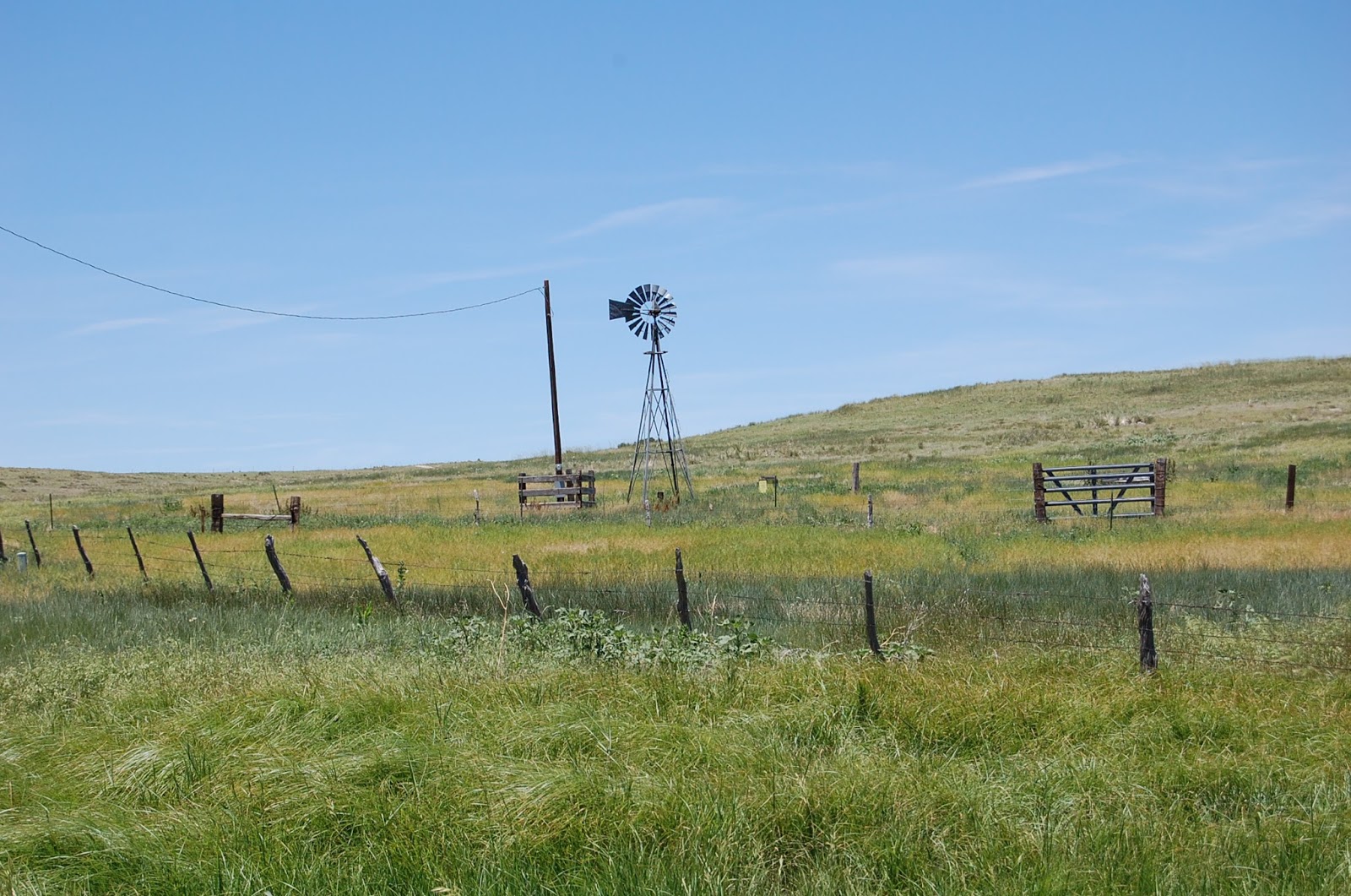
1. Take a trip.  I only suggest that at the beginning because I just returned from a four-day journey that not only re-energized my thinking, but also provided some wonderful and stimulating ideas for a romance I am writing that is set in the 1880's on the grassy  plains of southern Colorado.  At my sister's suggestion we ended up driving along a dirt road through those exact grassy plains. In addition to returning to town with lots of bug bites, I also came away with some wonderfully inspiring ideas for what a character might feel on a summer morning. The trip also had me thinking up new scenes. Now we can't always take a trip to the exact story location, but we can do other things.

2.  Try fresh research.  We may all do research before we start writing a story, but sometimes you have to go back and re-study some of those old notes. Remember why you were putting things a certain way, or look for small tidbits of research that you might have overlooked in your writing and use them. That refreshing of your ideas may spark new thoughts and new directions in your story. If you are writing historical pieces, research can always play as major role. The problem is not to let it get so overwhelming that all you do is research. Sooner or later you need to stop and write that story.

3. Try a new approach.  I usually write off the top of my head without planning what will happen next, but sometimes that can also slow me down. Sometimes it pays to take those few extra moments or hours to sit down with your plot and characters and think about what you want to happen next. Are there scenes that you realize you will need to get to a certain point? Try writing them, or at least try a couple of different story or plot ideas and see if might help get you past this current hung up point.

4.  Try writing in a different genre for a short story or a non-fiction piece of writing. Much as I love writing romance and mystery or suspense I also once enjoyed reading science fiction and horror. A month ago I went to a session on writing horror and found us studying so many of the masters I had once read. It gave me new ideas for possible short stories and I came home and started a science fiction work. It got me back to writing and that was what was important. I may turn the story into a short serialized piece. I have also been working on several non-fiction biographical pieces that help keep the writing flowing.

5.  Try writing sprints. This is something that I have heard work for so many people.  This week I plan to take part in several write-ins with different groups of authors and I may try some writing sprints as we work on our projects.  I want to see how successful that might be. Again, the key is trying something new and something that also helps to keep writing.

Don't let the summer get away from you! We are hitting peak vacation time, but you can also use it to re-energize your writing so that when you come back to doing it full time or part time, you will be ready to go!

Monday, May 22, 2017

5 Tips for Getting Organized

Every time I need to take a break from writing I seem to find myself wanting to get organized. I find myself thinking that next time I'll do a better job of being organized and that will be the answer to everything. I'll get organized, I'll be able to think better. I'll be able to write better, and everything will just all into place.

Well, unfortunately there is no easy answer to getting the muse to work, but I do find that sometimes it pays to do some re-organizing. It can help.  So how do you re-organize yourself?

1. Start with your notes.  Do you keep story ideas written down on small slips of paper? Do you put them into notes on your phone? Do you tuck away story ideas for a later date?  Well, sometimes just organizing those notes and putting them all into one place can bring back an old idea or get you started on a  new project. Put them all into one place and then separate them every so often. You might find several that go together and can send you off in a certain direction.

2. Organize your work space.  I don't know about you but I find myself constantly losing just about everything I need. When you need that information on a certain time period or need to check a certain piece of grammar in your editing, you suddenly can't find the book that might have the answer.  My solution to that is to keep several editing and grammar books right on the desk next to my computer. When I was working in a newsroom, I always had a dictionary handy (in those old days we didn't have handy references built into our typewriters. I still like having the book to look things up.

3. Keep a notepad or notebook to write down things for later.  I keep things in a daily calendar notebook so I can not only see what I need to do today schedule wise but so I can also have it handy to refer back to it later.

4. Use your phone to take pictures. My sister keeps all her notes and projects on her phone.  If she needs to remember an article or even a recipe, she takes a picture of it so she can refer back to it later. I'm not sure that works for me because I would forget I have it, but that can work. Even in your writing it can work well.  For instance, if you're doing research in  a museum take pictures of the displays or even the reference material.

5. Take the time to organize.  Again, whenever things get too crazy,I know I need to just spend a day putting everything back in its place. Next month, things may go crazy again, but for a while I have them in place and know where to find them.  I regularly teach classes and often find myself suddenly needing certain writing books. I may keep them around me for the month of the class, but when it's over they go back on the shelf so they don't clutter things up too badly.

The key to all this is not to let the clutter get so out of hand that the job becomes overly time consuming. When I was working, I often had to share a desk with another news producer. It paid off because at the end of the day I had to clear out all my clutter so I could start fresh the next day. I still often do that at the end of the day or the end of a project.  Keep the clutter in line and you can succeed!

Writing in the New Year

Every year don’t we all as writers make promises to ourselves to write more in the New Year? This will be the year when we get another book ...